
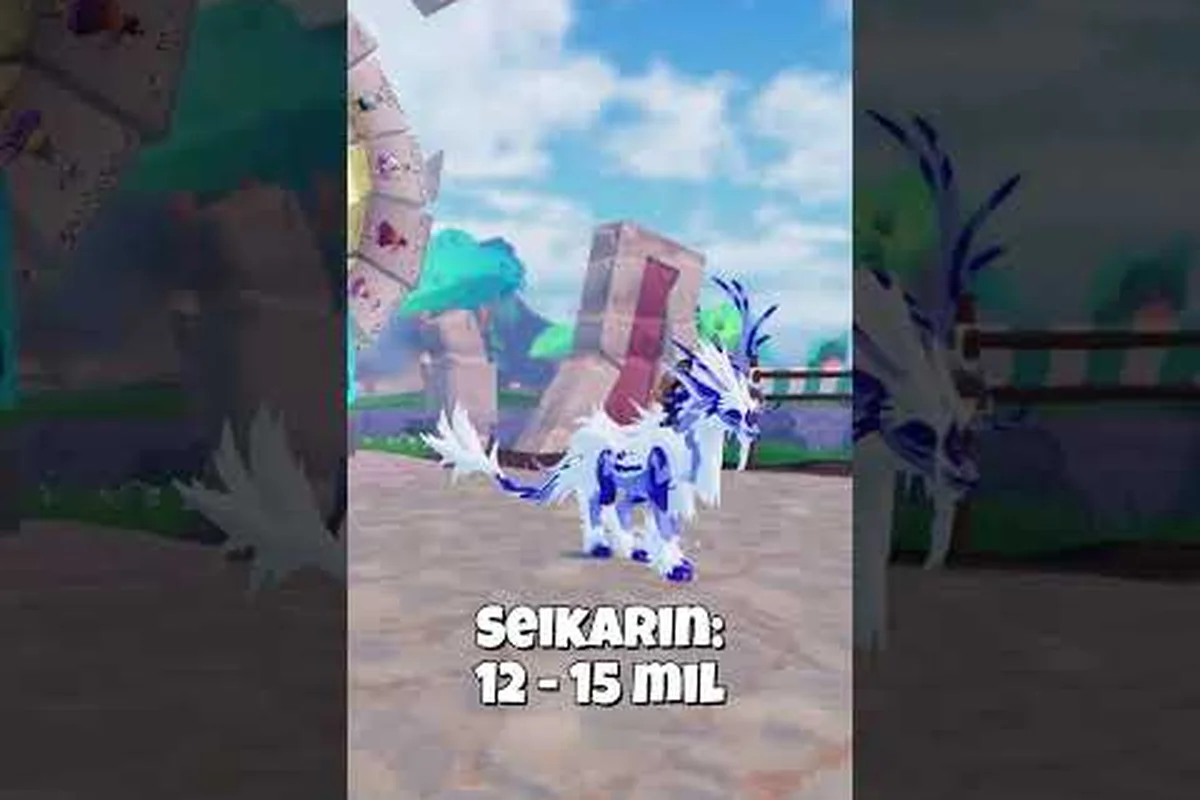
Smart trading in Dragon Adventures is not about flipping the rarest dragon in your lair for the first offer that lands. It is about reading demand, understanding which species move quickly, and knowing how each dragon's secondary use (breeding, PvP, farming, coin runs, or gold runs) affects its real market value. Players who treat their lair like a portfolio rather than a collection close more trades at better margins, and that is exactly the lens this tier list uses to rank the Dragon Adventures best dragons for trading right now.
The list below is built on three practical signals: how often a species appears in W/F/L threads on the r/DragonAdventures subreddit, how consistently it is asked for in trade requests, and how stable its price has been through recent events like the Solstice Event (live as of September 2026 with Leonelios and Celesteis). The official Dragon Adventures Roblox page confirms there are over 200 unique dragon species, so even a focused trading list will not cover everything. Instead, this guide gives you a working framework plus a ranked shortlist of species that consistently hold value across use cases.
How Trading Value Works in Dragon Adventures
Trading value in Dragon Adventures is not a single number on a sticker. It is the intersection of three shifting variables: how rare the dragon is, what it can do outside of trading, and how badly the community wants it this patch. A dragon that is rare but useless will stall in your lair; a common dragon that everyone wants for breeding or PvP will fly out of your hands.
The Three Pillars of a Tradeable Dragon
Every dragon on a strong trading shortlist scores well on at least two of the three pillars below. The third pillar is the tiebreaker that decides whether a species ends up in the S-tier or the B-tier on a given update.
| Pillar | What it measures | Why it moves the price |
|---|---|---|
| Demand Drivers | Breeding viability, PvP viability, event utility | A dragon that solves a problem (limited breeding, AoE damage, event farming) commands a premium because buyers have a clear reason to want it |
| Supply Ceiling | Egg source rarity, hatch rate, time-gated availability | Dragons locked behind events, low hatch rates, or retired breeding pairs hold value because the supply cannot be flooded overnight |
| Flip Velocity | How quickly the dragon resells after a trade | High-velocity species let you recycle coins and gold into the next deal instead of holding inventory |
According to community data shared across the official Dragon Adventures Discord, most successful traders treat the W/F/L system less like a pricing oracle and more like a sentiment gauge. A dragon marked "fair" in a thread is moving at its true market rate; a dragon marked "win" for the seller is above market, and players will eventually stop paying that price.
Why Secondary Use Cases Matter So Much
A dragon that is only collectible tends to have a soft floor and a hard ceiling. Collectors will pay a premium once, but they do not need ten of the same species, so volume traders cannot scale into that market. A dragon that is also a top-tier breeder, a top-tier PvP combatant, or a top-tier coin and gold farmer stays in demand year-round because players keep needing fresh copies.
That is why the Dragon Adventures rarest dragons list and the best trading list overlap heavily but are not identical. Rarity without utility is a museum piece; rarity plus utility is a tradeable asset.
S-Tier Trading Dragons: The High-Floor, High-Ceiling Picks
These are the species that consistently close trades above their perceived value and rarely sit in a trader's lair for more than a few days. Their value resilience stems from a combination of limited egg pool availability, high in-game demand for both collection and breeding projects, and consistent aesthetic appeal that drives player-side undercutting. They hold price even when supply briefly spikes after an event ends, because whales and mid-tier collectors absorb the surplus inventory within 24–48 hours of a limited event wrap, preventing the post-event crash commonly seen with lower-tier species like Vine Dragons or Terra Dragons.
Leonelios and Celesteis: Solstice Event Anchors
The two newest dragons added with the September 2026 Solstice Event are the freshest demand drivers in the game. Both Leonelios and Celesteis are limited-time event species, and as of the official Dragon Adventures game page, they are part of the active Solstice drop. Because they cannot be reliably farmed outside the event window, the supply ceiling is hard, and demand is split across three distinct buyer groups: collectors who want one of each, breeders chasing a new meta pairing, and PvP players testing their movesets.
| Attribute | Leonelios | Celesteis |
|---|---|---|
| Source | Solstice Event 2026 (active) | Solstice Event 2026 (active) |
| Primary buyer | Breeders | PvP players |
| Demand signal | Limited breeding pair slots | Limited AoE toolkit |
| Price stability | High while event runs, soft cliff after | High while event runs, holds longer due to PvP use |
| Flip risk | Medium (event end dump) | Low (sustained PvP demand) |
Community testing shared on Discord suggests Celesteis will hold value longer than Leonelios because its combat toolkit gives it a use case outside the event. Leonelios will likely follow the standard event-dragon curve: strong floor during the event, soft landing for two to three weeks after, then a recovery as it becomes a heritage breeding piece. If you hatch extras early in the event, that is the optimal sell window.
Event-Limited Heritage Dragons: Contotoro and Harremara
Dragons from older limited events tend to have the strongest long-term trading value because their supply is permanently fixed. Contotoro in particular has become a benchmark trade in the community, and our dedicated breakdown of Contotoro's current value shows it trading in a tight band rather than swinging wildly. That kind of price stability is what serious traders look for.
| Heritage Event Dragon | Trading Strength | Best Buyer |
|---|---|---|
| Contotoro | Consistent value, high flip velocity | Mid-tier collectors, new meta breeders |
| Harremara | Slow climb, premium ceiling | High-end collectors, show-lair builders |
| Older 2024-2025 event dragons | Volatile but profitable for informed sellers | Speculative traders |
The lesson here is that event-limited heritage dragons behave more like trading cards than in-game pets. A patient trader who buys a Contotoro during a brief post-event dip and waits three to four weeks can usually exit at the pre-dip price plus a small premium.
A-Tier Trading Dragons: The Workhorses
A-tier dragons are not the flashiest picks, but they are the species you can move in volume. If you are grinding for coins and gold rather than chasing one big score, these are the dragons that keep the pipeline flowing.
Top Breeders That Double as Trade Assets
The best trading dragons in this game overlap heavily with the best breeding dragons because every successful breeding project creates downstream demand for the parents. Our Dragon Adventures breeding season guide tracks which species spike in demand during limited breeding windows, and the same names show up on every cycle.
| Dragon | Breeding Use | Trading Behavior |
|---|---|---|
| Kostragula | Top-tier parent for several meta dragons | Holds value year-round, spike during breeding events |
| Leonelios (event) | Fresh parent for new Solstice pairings | High demand, sell extras fast |
| Stable meta parents | Required for limited combo breeds | Low volatility, predictable margin |
Kostragula is the clearest example of a dragon that earns its trading value through utility rather than rarity. It is not the rarest species, but because it is part of several meta breeding paths (as detailed in the Kostragula breeding breakdown), breeders are constantly looking for one. That constant buyer pool is what makes it such a reliable A-tier trading pick.
Top PvP and Combat Dragons
PvP-focused players need dragons that can deal damage, survive engagements, and counter the current meta. A dragon that wins duels today is worth more than the same species sitting idle in a trader's lair, and community data on Reddit repeatedly shows combat-viable species reselling within 24 to 48 hours of being listed.
| Combat Role | Demand Strength | Best Trading Window |
|---|---|---|
| Damage dealers (high DPS) | Very strong | After a meta shift |
| Tanks (high HP, utility) | Strong | When new glass cannons emerge |
| Support/cleanse | Steady | Patch day through week two |
The interesting nuance here is that PvP value is meta-dependent, so combat traders need to track patch notes. The species that is S-tier in patch 3.1 may be B-tier in patch 3.2 if a new counter is released. This makes PvP dragons higher-velocity but lower-stability than breeding or heritage picks.
B-Tier Trading Dragons: The Coin and Gold Farmers
B-tier dragons will not make you rich on a single trade, but they are the backbone of a steady coin and gold economy. If you play actively and want to convert playtime into trading capital, these are the species to invest in.
Best Dragons for Coins and Gold Runs
Coin runs and gold runs are repeatable farming loops where you defeat enemies, collect drops, and convert them into currency. The dragons that excel in these loops tend to have three traits: high damage per second, good mobility, and an elemental or ability kit that shreds specific enemy types in a given world.
| Farming Trait | Why it matters | Example Use |
|---|---|---|
| AoE damage | Clears groups faster | Event coin rushes |
| Elemental matchup | Bonus drops on weakness hits | World-specific farming |
| High base HP | Fewer deaths, more uptime | Long grinding sessions |
Players focused on building coin and gold reserves before a big trade should look at the Dragon Adventures world levels breakdown to find which world offers the best farming density for their level range, then pick a dragon that exploits that world's elemental weaknesses. The dragons themselves are the B-tier picks; the world pairings are what unlock their value.
Stable Mid-Tier Breeders
There is a long tail of dragons that are not headline breeding pairs but are useful as filler parents for cheaper combo breeds. These species move slowly, but they move consistently, and that is exactly what you want when you are building a trading reserve rather than flipping for profit.
| Category | Trading Profile | Best For |
|---|---|---|
| Stable mid-tier breeders | Slow but consistent sales | Volume traders |
| World-locked farmers | Niche demand, no spikes | Patient sellers |
| Cosmetic-only rares | One-time collector sales | Casual traders |
How to Value a Trade Offer in 2026
W/F/L is the fastest valuation shorthand, but it breaks down when a dragon's demand spikes — for example, a Frostfang or Celestial during limited events can shift from a "Fair" to a "Win" overnight. Cross-check the label against current demand trends, hatch rarity, and whether the species is meta for PvP or farming before accepting or rejecting an offer.
The Five-Signal Pricing Check
Use this five-signal check every time before you accept a trade. If four out of five signals say "fair" or "win," you are looking at a real offer. If only one or two signals agree, the trade is likely tilted and you should pass or counter.
| Signal | Where to check it | What "good" looks like |
|---|---|---|
| Recent W/F/L threads | r/DragonAdventures | Multiple "fair" votes on a similar offer in the last 7 days |
| Discord market chat | Official Discord | Active buy/sell range visible from real traders |
| Patch recency | Patch notes | Dragon not buffed or nerfed in the last 14 days |
| Event status | Event calendar | No major event ending within 48 hours that could flood supply |
| Your own exit plan | Personal trading log | You already have a buyer in mind at a higher price |
The fifth signal is the one most beginners skip, and it is the one that separates a hobbyist from a serious trader. If you cannot name a specific buyer or a specific resale price before you accept a trade, you are not trading; you are gambling.
When to Walk Away From a Trade
Walking away is a feature, not a failure. Three situations should always trigger a pass: the buyer is pushing for a fast close, the offer is heavy on species that are visibly soft on Discord, or you are the only person who has offered on that dragon all week. In all three cases, the price you are being offered is not the market price; it is the buyer's preferred price.
Common Trading Mistakes and How to Avoid Them
Even players with deep dragon adventures trading logs fall into the same five recurring traps — overpaying on impulse flips, ignoring dragon adventures best dragons for coins value tiers, mixing breeding projects with sell lists, skipping the in-game index price check, and panic-selling during low-demand windows. Each mistake quietly shaves 15–30% off what a clean, patient flip of a dragon adventures best dragons for trading pick would otherwise return, so avoiding them reliably outperforms chasing any single "perfect" species.
Mistake 1: Trading Into a Cooling Meta
If you buy a dragon that was the S-tier PvP pick last patch and you do not sell it within the first two weeks of the new patch, you are holding a depreciating asset. The fix is to set a sell-by date the moment you acquire a meta-dependent species.
Mistake 2: Ignoring Event Timing
Event-limited dragons spike at the start of an event, dip at the end, and then either recover or crash depending on their utility. Most losses in Dragon Adventures trading come from selling at the dip because you are afraid of further losses. The disciplined move is to sell at the start, not the bottom.
Mistake 3: Confusing Rarity for Value
Rarity is necessary but not sufficient for trading value. A rare dragon that nobody wants will sit in your lair for months and cost you in growth food and time. Always stack rarity on top of at least one of: breeding utility, PvP viability, or farming use.
Mistake 4: Overpaying With Legacy Inventory
If your lair is full of dragons that were meta six months ago, the temptation is to trade them away at whatever price someone will pay today. That is a real loss, not a real trade. A better move is to wait for the next event that re-elevates those species, or to use them as filler in a larger trade rather than selling them off in pieces.
Mistake 5: Skipping the Paper Trail
Keep a simple log of every trade: what you gave, what you received, the date, and the W/F/L consensus at the time. After a few months, you will see which species you are consistently winning on and which you are consistently losing on. That data is more valuable than any tier list because it is calibrated to your own trading style.
Frequently Asked Questions
What is the single best dragon to trade in Dragon Adventures right now?
The best dragon to trade right now is Celesteis, the Solstice Event dragon added in September 2026, because it has the strongest combination of limited supply, fresh demand, and a sustainable PvP use case. Leonelios is a close second, but Celesteis's combat toolkit gives it a longer post-event floor.
Are event dragons always good trading picks?
Not always, but they are usually good. Event dragons combine hard supply ceilings with concentrated demand, which produces predictable trading windows. The risk is selling at the post-event dip, so the best practice is to sell extras during the event rather than after it ends.
How do I check if a trade is fair before I accept it?
Cross-check the offer against recent W/F/L threads on r/DragonAdventures, the market chat on the official Dragon Adventures Discord, and current patch notes. If at least three of those sources say the offer is fair, you are looking at a real trade. If only one source agrees, pass or counter.
Should I prioritize breeding value or PvP value when trading?
Prioritize whichever buyer pool is larger in your server region, but if you have to pick one default, choose breeding value. Breeding demand is steadier because new players need parent dragons every patch, while PvP demand is meta-dependent and can collapse overnight after a balance update.
Can new players with small lairs still trade effectively?
Yes, by focusing on B-tier farming dragons that are easy to obtain and by trading up incrementally instead of trying to land one big score. The disciplined approach is to convert playtime into coins and gold through farming runs, then use that currency to add one strong A-tier or S-tier pick per month rather than chasing big trades from scratch.